Tag Archives: san francisco

Why Bluegrass Night is Unlike Other Nights

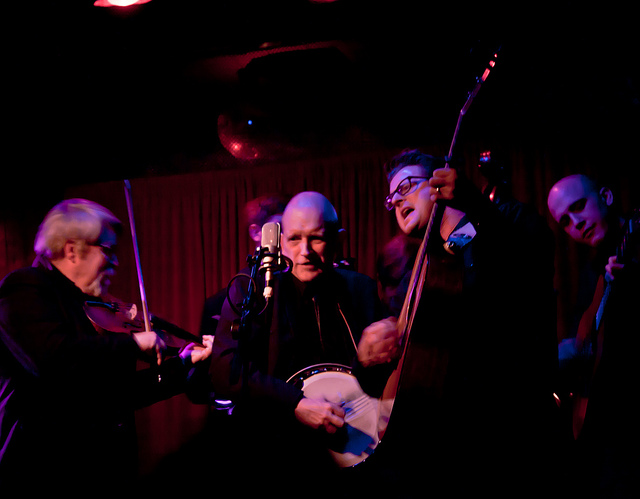
A real picture taken by a real person (nokapixel on flikr) of bluegrass night at Amnesia in the Mission

It’s a Monday night in San Francisco and about one month ago I ironed patches onto my skinny jeans to stave away the quite serious hole progression in the upper thigh area. The patches are not the same color as my jeans and they are huge. Are they a fashion statement? Are they hideous? It doesn’t matter. I can sit cross-cross-apple-sauce in them without exposing myself, and it’s bluegrass night and my boots are on.

For me, bluegrass night is also improv lesson night, and while we play games and learn to forget our inhibitions, my boots have a mind of their own, stompin’ and gearin’ up for the pluckin’ and strummin’ of the folksy tunes we’re about to hear. Somehow, improv and bluegrass go together quite well, based as they both are in community and doing something for the love of the game.

And bluegrass night is unlike the other nights of the week, no matter how special they are. Other evenings don’t hold the same perspiration-scented twang that homespun bluegrass tunes carry, or the madness inherent in the wild twitches of the banjo player’s hand. Other nights have 20% less stomping, 38% less twirling, and 72% less “yips” and exclamations of yeeeeeeeeeeeeeeeeeeeeeeeeeeeeee-haw.

It’s a very present call to the past, an invocation of a time that may not have existed, a rootin’ tootin’ shindig.

At Amnesia, the bar that feels like the hull of a forgotten ship, which has an octopus in the corner and a selection of Belgian beers on tap and in the bottle, bluegrass draws them in. Some don’t understand what’s going on, don’t quite get the spirit or understand how to stomp and clap at the same time and which foot and which hands to use. Some are caught up in the stereotype. But the energy is contagious, the mixture of nostalgia and booze, the fire-spirited fiddle and plum-drum bass brewing the night’s mood.

Sway a little to the beat, pick up your feet and set them down, in rhythm. Don’t be afraid to believe in the myth, in the fields and the honky tonk and the sweet smell of hay and betrayed love. Because it’s bluegrass night, where the music is too good for pretention. It’s only simple if you let it be.

Grab a Maredsous, pick a partner and do-si-do, if you dare, or at least stand a little closer to the stage. Biting is for afterwards.
Tagged , , , , , ,

An Oklahoman Laments the Loss of Fall

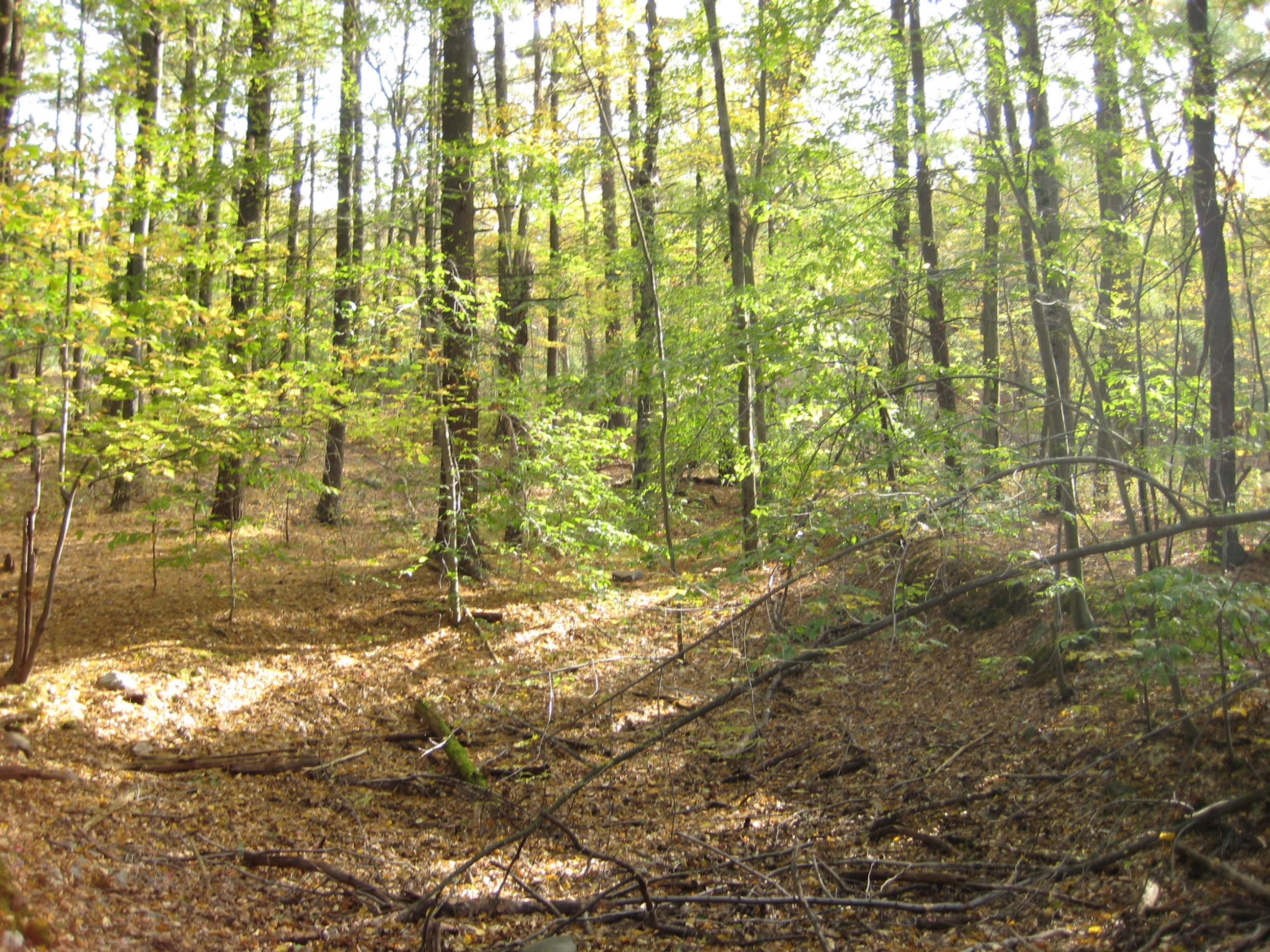
Redwoods don’t drop their leaves.

So it’s fall now, I think. I’m not really sure anymore if the seasons exist. Here in San Francisco nothing changes. Quinoa’s on its way out, boar’s on its way in. Gourmet sausage is somewhere in the middle, the roasted pork chop probably isn’t going anywhere, but fall isn’t coming. That’s for darn sure. Even though sometimes the wind blows and it’s got that crisp feeling and maybe there’s a leaf somewhere in there too, but it’s all an illusion. Fall isn’t going to come here at all.

Sure we get the Halloween Candy, and the pumpkins, and fall-themed lattes from Starbucks, but they won’t bring me a proper autumn. And the kids are back in school, and preschool-high school teachers are wearing themed sweaters over wildly patterned turtlenecks, but it makes no difference whatsoever.

The fog rolls out and in.

We’ve already been wearing sweaters for the past three months and one hundred years. We’ve already lit our fireplaces to stave off the cold of a chilly summer night, and warmed our hands at a bonfire on the beach to keep our fingers from turning blue in late May. We never put our scarves away in the first place, but we’ll never have to turn on our heaters because we don’t have them. Time doesn’t progress here so much as ebb in and out. Other places go in circles, but we move back and forth along the same straight line.

Still, the children get older. The facial hair on the hipsters gets slightly more ironic. Banana Republic models get more smug as they laugh in their business casual clothes.

Somewhere, college students are planning apple picking trips and updating their facebook statuses about how excited they are about wearing fall clothes. Somewhere, the leaves are beginning to turn slightly less green as they prepare to all fall down. But not here. Not ever.

I’ve only been on the West Coat for 2.5 months. Thank God it’s never too early for nostalgia. I’ll go out and drink $8 cups of coffee until the pain goes away.

Tagged , , , , , , ,

Fake Backstories of San Francisco Neighborhood Names: The Mission

Mission Dolores and the site of the Great Carnitas Cook-off

Journey with me, if you will, back to the magical peninsula on which is situated that most unusual of cities, San Francisco, a gleaming wonder, 7×7 miles of living myths, tree huggers, dog lovers, and Banana Republic wearers.

Directly south of the city center is a sunny, burrito-scented patch known as The Mission, not A Mission, or Mission, or Mision, but “The Mission.” Its population is divided more and more evenly between feather-wearing hipsters and the more original hair-gel wearing latinos.

Dolores Park lies at the heart of The Mission, a park named for the nearby Mission Dolores, and the site from which the nearby restaurants have taken their carnitas recipes, perfected by Father Junipero Serra in the year 1779, the year of The Great Carnitas Cook-Off.

At the time of its founding in 1776, Mission Dolores was one of 18 different missions located in the city, each run by a brother of the same mother. The founders of these missions were drawn to SF because of its reputation for being a liberal lighthouse and a place where people could have a go at being themselves. In general, they disapproved of this laissez faire attitude and wanted to shut it down and end the rampant short-wearing that was going on at the time.

So 18 brothers came out to the city and each one set up his own mission, with Father Junipero Serra choosing the rather wise location of what would come to be known as The Mission—sunny and flat, it was both easy and pleasant for the friars to bike around and get their morning lattes.

Next to God, the Holy Spirit, and Jesus, the Serra brothers loved them some good carnitas. In addition to the prayers and confessionals, in each of the missions was also non-stop innovation in the realm of this delicious fried pork dish. Each week, the brothers revealed their latest carnitas creations and the parishioners would rejoice and partake.

After about a year, however, with the congregations growing and the general population feeling over-served by the well meaning but all too present Serra brothers, it became painfully obvious that 18 missions in such a small area was probably too much. The short-wearing problem was already under control, and the brothers were getting tired of meeting potential parishioners only to find they were already in attendance at their brother’s mission.

It was decided at a family meeting that only five missions were to remain open in the city, and that those missions would be chosen in a great carnitas cook-off. Each brother rushed off to their mission and began preparation for the carnitas battle.

On September 17th, 1779, the day before the contest, Father Junipero Serra prayed a mighty prayer to the Lord.

“Lord, make my carnitas an instrument of your peace. Where there is toughness, may there be tenderness, where there is dryness, may there be moisture. Lord grant that I may honor and glorify you in the carnitas cook-off, and I shall exalt your name forever and ever.”

And the Lord did hear Father Junipero’s prayer, and his carnitas that day were filled with a holy flavor that none has ever tasted the likes of since. His brothers and parishioners alike were in awe of the indescribable flavor, and rumor has it that some shouted for Junipero’s immediate sainthood upon tasting his saintly creation.

And thus his mission, Mission Dolores was named The Great Mission, and he stayed in the city along with his five favorite brothers. Over time, The Great Mission was corrupted to just The Mission, and the name was given to the area within the carnitas sway of Father Junipero.

And that was fake history. Because research takes time.

Tagged , , , , , ,

Fake Backstories of San Francisco Neighborhood Names: The Sunset

When living in the city gets too exciting, head to the sunset.

Stanley Kubrick loved to eat dry toast in the morning. A tortured, artistic, soul, he refused to put anything on his bread to soften its coarseness or ease its transition down the gullet, as he wished to be reminded of the dull, dryness of everyday life and its sad, petty cruelties, all of which he captured in his film 2001: A Space Odyssey, which he filmed in San Francisco in the neighborhood to be known as the Sunset.

The filming of 2001: A Space Odyssey took over ten years, largely because Kubrick insisted that the bulk of the movie be endlessly interweaving psychedelic patterns that he created by rearranging small pieces of colored felt on a gigantic black felt board. Because of the area’s damp climate, the felt board would invariably become wet and unusable from fog moisture, which leaked into the studio despite his best efforts, and the team would regularly shut down filming and have a pint or two at Durty Nelly’s, where Kubrick would always talk at length about the dry toast he ate every morning. After the fourth year, the film crew tired of the same spiel and especially the phrase “petty cruelties,” so it was a great relief when the film was finished and released to great critical acclaim, something that surprised everyone without exception. Stanley Kubrick ate an extra slice of dry toast the morning he read the NYT review because he tended to quash feelings of excitement with bland, unpleasant food.

At the time of Kubrick’s film involvement in San Francisco, the Sunset was called Fogtown, which was an accurate name though the residents hated being dismissed as fog dwellers and portrayed in the media as “too moist to be human.” The fog people would often protest the rampant media prejudice in the Financial District during lunchtime, when they would blockade the entrances to sandwich shops, cafes, and public transit entrances with their very bodies. The distress was unbearable and the stock market suffered accordingly after every suit was forced to pack a lunch during a full week of lunchtime lie-ins. The police department decided to take action.

Stanley Kubrick, an artiste, decided that the only proper way to experience the film of his heart’s desire was to project it on a sheet that blanketed a building, and shut down the entire downtown area in order to subject movie-comers, hot dog vendors, and passers-by alike to his brilliance. Besides, the fog people were planning another protest on the day of the movie’s release so most people were prepared for mayhem and un-productivity. Secretly, the police lay in wait with banana cream pies with which they would lure the fog people’s off their soggy bottoms and away from sandwich shops.

A carefully orchestrated blackness descended over the city, summoned from the incredibly disturbed and misunderstood mind of Stanley Kubrick. As the movie flashed onto the screen, downtown bustle ground to a halt, the only noise heard the occasional flapping of a tourist’s map. In the alleyways, police readied their pies for the fog people.

The film meandered, reached its climax somewhere, and then denouemented and ended. The crowd lay, sat, stood, or leaned in awe and confusion at what they had just seen. Munching on a piece of dry toast, Kubrick rose and spoke a few words, the most important of which were these:

“This was filmed in Fogtown over a period of ten years. I have grown old there and am now reaching the sunset of my life (he wasn’t actually old—he was just being dramatic), and I remember a day in January three years ago, when I saw the sun sinking into the ocean and imagined myself as similar to the sun, a brilliant orb also seeking the depths, which I have found now in the sunset of my years because of this movie (again, he’s just being dramatic), and in the neighborhood that shall now be known as The Sunset.”

And the people did cheer and everyone did eat banana cream pie and the name stuck.

And that was fake history. Because research takes time.

Tagged , , , , ,

I’m not a local, but then again, who is?

So cliche.

I was born in Colorado, spent three years in West Virginia, lived in Oklahoma for middle and high school, went “back east” to Boston for university, and then farther east to Egypt, and then even farther east to San Francisco.

To many people in California, Oklahoma is just as exotic as the Lost Kingdom of Thormasgurd, except no one wants to know more about Oklahoma. They assume things are radically different “out there” and they’re usually right. Sometimes they even express a fear of going to the middle place in the US because it’s a lawless, conservative backwater where people tie jackets around their waists, and I encourage this by tightening my cardigan around my middle and yelling “Yeee haw!” every time I meet someone.

I remember the first time my parents visited me at Boston University. I’d been away for all of eight weeks or less when they visited in early October, but on the way to Legal Seafood, I felt compelled to show them how city-savvy I’d become by wearing an eggplant J. Crew sweater and jaywalking, often stranding my parents on opposite sides of the street. Instead of proving myself an adroit city-dweller, I pissed off the parentals through my reckless walking behavior and ended up feeling dumb and sweating because it wasn’t cold enough to be wearing a sweater and speed walking.

Over the course of four years, and it did take me four years because I’m a slow realizer, I found that I would never be a local in Boston, that somehow my Oklahoma roots were standing out ever starker on the scalp of my collegiate experience (unwise metaphor?), and that, to my never-ending surprise, I was actually encouraging it, getting involved in things like stew-making and contra dancing and prairie-dress-wearing. While in the northern wasteland, I found comfort in identifying with a mostly mythological Oklahoma, not at all the same one I had mildly despised while growing up. The Oklahoma in my collegiate mind was something else. It was a warm fire in winter and a sense of belonging in a place where everyone was far from home.

Now in San Francisco, I’m finding the same phenomenon to be true. Though I haven’t lived in Oklahoma for roughly five years, it’s still the place I’m “from,” and I will likely be from there my entire life. In cities like San Francisco, many people are in a similar boat. Maybe not one quite as conservative or mythologically rich, but most people are not “from here.” Many are from other parts of California or other states on the West Coast, and they’ve been drawn to the hilly flame of San Francisco like hapless moths, just like I have. Quite often there’s nary a local to be found.

Being a local is a kind of rare currency in this city. It connotes intimacy with a place that so many people desire, and it’s something that can’t be bought or earned. It can only happen or be given by parents foolish enough to try to withstand the expense and private-school calculus of raising a child in the city.

I will never be a local here, no matter how asymmetrical my haircut is.  The only place I am a local is back in Oklahoma. I think that makes me a continual explorer, but it also adds the burden of creating home every place I go, but I guess that’s what we all have to do anyways. At least I’m in good company.

Tagged , , , , , , ,
Design a site like this with WordPress.com
Get started