Category Archives: Three minute read

My Feet, the Moth Kings

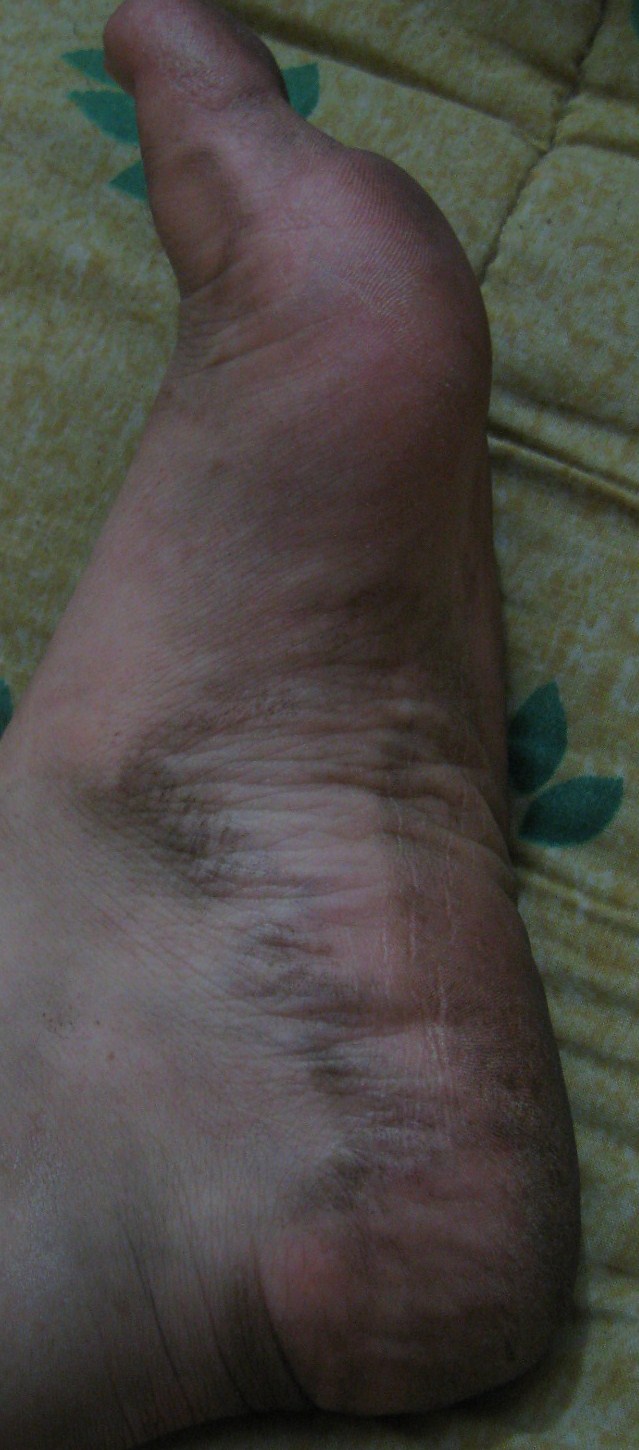
They don’t always look this bad. Sometimes they look worse.

In Boston, my feet lived like caterpillar kings, cocooned away from the outside world. I took care to shelter them from the elements, always dressing them in semi-clean, hole-free socks. Each day, I firmly laced them into closed toed shoes that were either waterproof or water-resistant, and each night I tucked them into bed along with the rest of my body. Only my head remained above the covers in order to keep an eye on my teddy bear, who I do not trust.

In Cairo, my caterpillar king feet have undergone a great metamorphosis. They have emerged from their sock cocoons transformed from soft, wussy flesh colored appendages to hardened, grey, creatures of the street.  I continue to watch the change with grim fascination as the days pass and Cairo grime continues to take its toll, as they become moth kings.

First, let us discuss the street environment as it relates to my feet. Since Cairo is essentially the last frontier of the desert, its streets are quite dusty. Some might even call them boulevards of dust, dust avenues, or lanes o’dust. In addition, the city’s continual decay and repair necessitates bags and piles of construction elements, which are set loose by the wind and join their long time companion, dust. To top it all off, garbage particles of various stripes also do their part in making a magical mixture of filth that is whipped up by the car, bus, pedestrian, and equine traffic.

Were the climate here similar to that of winter in Boston, my feet would have no need to concern themselves with these outside conditions. However, the climate being slightly hotter and drier, I was forced to cut the apron strings. I currently wear sandals daily, exposing most of my foot to the oven-like conditions of Cairo. Naturally, this has crisped my skin like a fine Christmas goose, and caused the formation of something akin to an exoskeleton over the majority of my foot’s surface area. This shell is comprised both of Cairo dust and dead skin cells that have baked onto my foot and now refuse to slough off.

As a cute furry creature snuggling against its mate in winter to stave off the cold, so the Cairo dust snuggles into every crease of my foot. At all times I have part of Cairo with me. Is there anything more poetic than seeing the greyish tinge of my heel and knowing that I am a carrier of the ancient history of the Pharoahs themselves? That as I walk down the street, I am absorbing the very heritage of great civilizations and various cuisines? Were I not afraid of contracting one of the more deadly diseases, I would surely stride barefoot down every thoroughfare in Cairo attempting to aggregate in the heel of my foot the very essence of this indescribable city, which I would then try to sell on ebay.

However, as much as I enjoy history immersing itself between my dead epidermal cells, my skin’s increasingly rough texture is slightly alarming, and I am almost certain my feet are going to start clacking on the ground like wooden clogs if I am not careful. After this year in Cairo, a pedicurist will only look at my feet and weep, which is why I’m going straight to a deck specialist to have her power wash my feet and then sand them down as soon as I get back to the states.

And no, I will not start wearing close toed shoes.
Tagged , , , , , , ,

Postal museums: people are stamp-eding to get in

View from the couch. Also, the only picture I took before my camera died. The only man who knew what this is has gone insane.

Today, just as the Egyptian army began activist clean up and put away time in Tahrir square, three happy go lucky American students arrived safely though thirstily at their apartments after a riveting day of museum hopping and fame snatching. If all goes well, I will be leaving my program shortly to begin my career as a full-time documentary interviewee specializing in Egyptian museums. Allow me to explain through the medium of story telling:

After the spiritual revelation that was the Egyptian Agricultural Museum, our group formed an unspoken consensus that we must taste the dust of every museum in Cairo that lies off the beaten path. Little did we know that our destinies and the destiny of one founder of pastpreservers.com would soon collide.

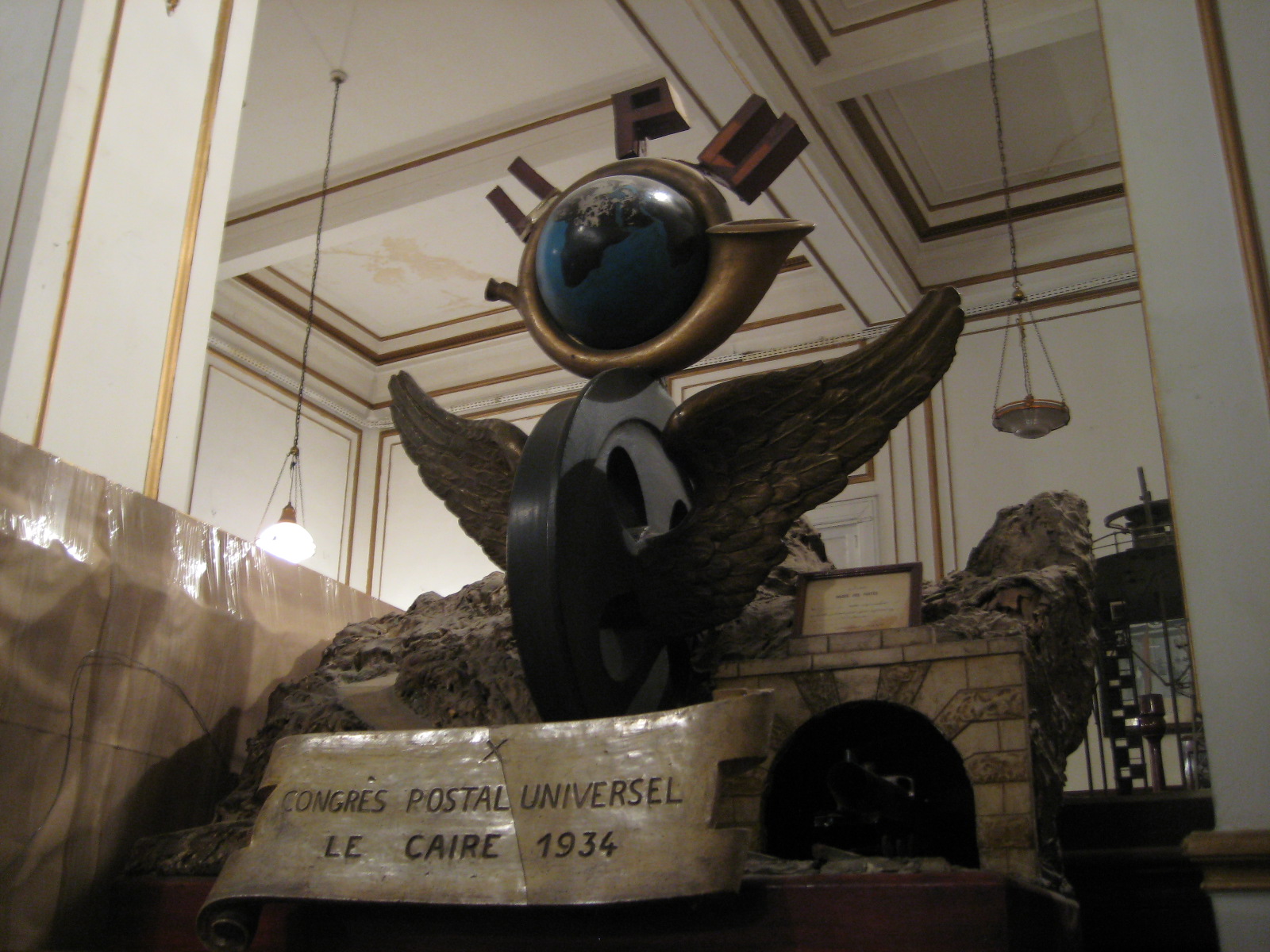
The next stop on our list was the promising Egyptian Postal Museum, a mecca for mail enthusiasts from all over Egypt and the world that attracts up to ten visitors a year. Incredibly, we almost missed the museum itself even though it was unlabeled and tucked away on the second floor of the national post office. When we arrived, the museum/postal worker found the key and opened the door for us to a one-room world of postal wonders. Dusty glass cases contained everything from international postal uniforms, stamps, miniatures of famous postal offices in Egypt, and figurines of postal workers from different time periods. It was more than I had ever wanted to know about Egyptian and worldwide mail delivery. Luckily, I avoided learning too much.

Personally, my favorite part of the museum was the couch and nearby fan whose blade was left unguarded, an element that added a thrilling level of excitement to what could have been a boring place. My heart raced as I gingerly stepped by the fan when I reluctantly got off the couch, nervous it would catch my chinos and begin boring into my flesh. I made it by safely, though I never made it back there after my short rest at the start of our visit, my one regret. I also regretted the fact the museum did not have air conditioning, a complaint I plan to tweet at the Supreme Commander of Armed Forces.

The museum was mustical, but the real magic happened as we were leaving. Turning to go down the stairs, I was shocked when I spotted another white guy on the ground floor peering up at us with equal puzzlement. We both thought to ourselves, “No way these people came all the way out here like us freaks to see the postal museum.”  It turns out we were both wrong. Our groups gave each other the up and down as we descended the spiral staircase and as we were about to walk by him and out the door forever, he confronts us.

Tension reached its peak for a brief moment but then he tells us that he works for an Egyptian television station and that he and his television crew are doing a piece on lesser known museums in Egypt.  He is surprised anyone else knows about this place and asks if we would like to be interviewed. Obviously, fame grubbers and blabber mouths that we are, we eagerly agree. The film crew sets up and the host of the show asks us hard hitting questions in passable English like “Is this your first time in Egypt” and “What was your favorite part of the museum?” Unfortunately for my friend, right before we began filming, I had  jokingly said “So will we be singing? We know a song in Arabic!”

So he had a surprise question as well, “Do you know any songs?” It was a cheap shot, to be sure, but I can’t say we (I) didn’t ask for it. If all goes well, you will see a short interview and song by us on Egyptian television (channel 25) after Ramadan.

SNEAK PREVIEW: Emily loves the couch!  Lack of English labels might be a problem for some tourists!

It’s pretty riveting stuff so I can understand why the people of Egypt are anxious to see it before the end of Ramadan. There will probably be another Tahrir sit in because of this…so much for life back to normal. #revolutionmyway

Tagged , , , , , , ,

Twas the night before Ramadan

Some Ramadan decorations…not the most impressive, just the closest

Twas the night before Ramadan and all through the flat,

No one was stirring, not even the mat

In front of the bathtub in spite of its mold,

Not to mention the pile of laundry to fold.

Emily was curled next to her laptop with care,

Playing too much with her freshly washed hair,

As she wondered what sights the morrow would bring,

The possibilities all in her head turning.

She had seen sprucing up for the past several weeks,

Lights and lanterns appeared and people clogged up their leaks.

She saw tapestries hung all full of colours bright

Pleasant figures in Alpha Market’s window one did spy,

The buzz in the air causing life to blur,

Evidenced by families buying twenty kilos of sugar.

“But,” she wondered, “how will this affect me,

I who have not yet embraced muslimery?

When will stores be open and how should I eat

if I cannot slaughter pigs on the street?

And what about alcohol, if I may be so bold?

Where will my 8th rate beer be sold?”

Oh life without urine-like drink did sound foul,

And just when she thought of giving a howl

She remembered the wonder of Ramadan here.

The streets, they say, be they far or near

Fill up with people as the sun departs

From sidewalk to sidewalk citizens satifsying their hearts

And their stomachs with delicious iftar vittles,

Not being shy, or taking too little,

Dates being thrown into the car windows of those

rushing home from their shops after they’ve just closed.

“Oh I wish,” she thinks,  “to eat with these folk

and though I’m not fasting I will hardly croak

at being invited to such a magnificent feast

where I will chow down on all kinds of roast beast.

“Until then,” she informs, “I still do not know

at what hours for my peanut butter I may go

to Alpha Market and for that matter

I remain clueless as to types of Ramadan clatters.

So please stay tuned as I absorb more culture

and I will pass it on to all of you for sure;

less facts than feelings as is my wont

But at least you’ll know all my favorite haunts.”

No complaining.

A few notes: I’ve noticed people buying food in ridiculous quantities at all the supermarkets, which have set up special Ramadan sections with all the necessities for having a proper iftar (break fast, occurs after sundown). One of the most important foods are dates, which are traditionally the first food one eats after fasting all day. Apparently people hand out dates to those struggling to get home in traffic or on the metro before the iftars. Water is also distributed since people fast from both food and drink.

I have been told about big tents that are set up all over town where rich people will prepare huge feasts for the less fortunate, and entire streets are full of those breaking the fast together. If this is real, I will take a picture of it. I will then post the picture onto this blog.

No alcohol may be sold to Egyptians during Ramadan (I think. This might just apply to bars.) and so you have to show your passport in order to get a beer. The hours for liquor stores are especially weird, though other places of commerce also have reduced hours during the day. At night, however, things get crazy. People stay up really late and feast and then sleep during the day. Unless, of course, you’re employed, and then life is a little harder.

More Ramadan madness to come!

Tagged , , , , , , , , , , ,

Why yes, there is a puppet horse

When someone said they were going to go to the circus tonight, I ditched my plan of watching The Aviator alone and got

I'll put a real pic up when I get it. Imagine this big enough for two men.

myself in a taxi, more than ready to terrify screaming children along with the clowns. We never made it to the circus, however, somehow missing the big top and going to another venue close by that houses the National Folk Dance Troupe. Since anything with folk dance is bound to be a good time, our night ended up being well worth the entrance fee and initial confusion.

The show promptly began forty minutes late, but it made up for the initial annoyance by being incredibly long. Most of the evening consisted of crowded dance numbers with gaudy costumes covered in more sequins and tassels than you could shake a stick at, the ladies swiveling their hips like they were trying to get a rabid beaver to release their right buttocks and the men sometimes shaking actual sticks. The dances were certainly not authentic Egyptian, but they won first place in Drevets’ book for use of agricultural props, such as water jugs and sieves. The award in unnatural costume design went to the number right before intermission for its use of neon orange and green spandex in the ladies’ costumes, using it in a style boldly combining eighties aerobic wear, sixties bell bottoms, and mermaid themes.

The highlight of the night, however, by general consensus with myself, was the horsey puppet dance. The black horse puppet wore a loosely crocheted, neon colored harness and reign apparatus that contrasted nicely with the slick of green and sequins the woman donned from her head to her toe. I do not know of any Egyptian tradition in which women flirt with life size horse puppets or real horses, but apparently the ritual is quite extensive and quite real. The horse (two men in a horse costume) was by far the stand out performer of the night, nuzzling its snout and prancing its paws with incredible humorous dexterity, outshining the woman who also pranced about and slapped the ground with a stick. And then the night got awesome.

The black horse descended into the sparsely populated auditorium and bothered people, pretending to bite people’s shoulders and giving girls kisses on the cheek, something especially loved by the older ladies who expressed their pleasure by wagging their fingers at the horse and trying to shove it away. One lucky girl even got pulled up to the front of the room and was forced to dance with the horse. She was a good sport about it, though not as good of a dancer as the horse.

Though I caught myself saying “Is this still going? Ah yes, it is,” a number of times after zoning back in during yet another belly dance (though they certainly were impressive the first fifty times), long after everything had sunk into a haze of bright colors and amateurish dancing, it was still a quite enjoyable night. I really wish the whole thing had been done with puppets though. I also wish I had my camera…must steal pictures from friend.

Tagged , , , , , ,

Sowing, Winnowing, and Manuring

Today we went to the Egyptian Museum of Agriculture, a gem that has and will be overlooked by hordes of tourists for

Hands on learning.

years to come. In this context, the word museum is misleading since the Agricultural museum is, in fact, more like a playground. Here are some of the differences between a “normal” museum, and the Egyptian Museum (playground) of Agriculture:

1) A museum has guests.

The Museum of Agriculture does not have guests. From the disbelieving looks on the employees’ faces, we were the first foreigners visiting the museum since the woman or man from Lonely Planet discovered it. The other few museum patrons were there for picnicking or loitering purposes, but certainly not to see the museum itself.

2) A museum requires and undergoes regular upkeep.

The Museum of Agriculture requires but does not undergo regular upkeep. It is set up similar to the National Mall in that the museum is a group of five buildings centered around a green space that has trees and statues in it, but the comparison ends there. The statues are placed without any apparent design and the lawn and trees have been left to their own devices ever since they were planted. The museum employees are hired to be present at the museum but not to do anything to it, in order to preserve the natural deterioration process. Thus, a thick layer of dust and one case bird droppings coat all display cases, broken exhibits remain unrepaired, and all textiles within the museum are in danger of turning into dust at the touch of a finger.

3) Some museum employees are knowledgeable about the museum and its contents. There is a curator.

From what we saw, no museum employee knew anything about Egyptian agriculture or this museum dedicated to its existence aside from its hours of operation. The Agricultural museum employee’s job is this: “Sit or stand near the entrance of the hall. Should anyone walk in, stare at them. Open and close the doors at the appointed time. Avoid dusting or improving the museum in any way.” As for the curator–should he exist– he is either dead or has been on vacation for the past three decades.

The star museum employees assist people in entering the exhibits and taking pictures with the mannequins while sweating on them and gesturing wildly, afterwards demanding extra money for having clearly gone above and beyond his normal call of duty.

4) The museum exhibits are educational.

Are you getting the dusty attic feeling?

In theory, the Museum of Agriculture is filled with educational material, and yet it would be an Olympic feat to actually learn anything from it. Aside from the fact most things are unorganized and poorly labeled, you will be too distracted by the ridiculousness of the place in order to do anything besides contemplate the museum’s existence itself and the thickness of the cobwebs on the windows. The two things I took away from the Horticulture hall, for example, after seeing dusty glass case after dusty glass case of different kinds of wheat stalks and seeds, corn stalks and seeds, bread, fruits, vegetables, stages of growing of wheat, etc, were: “There is a lot of variety in the world” and “This took a long time to assemble.”

5) The museum exhibits are not to be touched so as to preserve them for the next visitors. For this reason, there is surveillance of some kind to prevent the most curious from overstepping their bounds.

In the Museum of Egyptian Agriculture, you are almost completely alone and can do whatever you want. The entire place feels forgotten if not yet abandoned. Climbing into the exhibits and taking pictures is encouraged, as well as exploring blocked off parts of the halls and rifling through anything that isn’t encased in glass.

6) The opportunity to interact with material not yet put on display is minimal.

At the Museum of Egyptian Agriculture, there is a cabinet full of documents and photos as well as bin full of antique cigarettes on the second floor of the Hall of Horticulture in a nook on the landing with some agricultural tools in it. Feel free to look at the photos and guess what they might be. Consider the very slim odds of them every being used or seen by someone who might actually be interested in the information.

7) The only fun to be had is through the joy of learning.

The best part of the agriculture museum experience was being able to run around in it like kids and cause a ruckus, feeling like we were breaking all the rules even though there were no rules to be broken in the first place. Also, the green space within the complex was a real joy, complete with nice trees, cool birds, and two little pergolas. Though using the word paradise might be too strong, it certainly felt like a land preserved outside of time and space, which I suppose is the purpose of a museum though in this case it was achieved accidentally.

Tagged , , , , , ,
Design a site like this with WordPress.com
Get started