Category Archives: Humorous

A Brief Treatment of Common Singalong Pitfalls

Our program has been blessed with incredible musical talent, including guitarists, one percussionist, and someone who plays the spoons. Though all of them are gifted, only one has compiled, of his own free will, an entire songbook full of songs he transcribed, printed, alphabetized, and then put into a binder. This songbook is accompanied by a mini-me spiral bound version that looks as professional as anything you could buy from a Christian bookstore.

Because of the abundance of musical talent, at many of our gatherings we have had the great privilege of huddling around his songbooks, flipping through them until some loudmouth sees a song they like and then calls out, “Hey can you play _____”, a question that deserves a swift slap in the face since he was the one who transcribed every song himself.

Obviously the singalongs are wonderful, especially since we have able bodied players, a songbook, and people who are literate. One would even think we had the recipe for seamless, coordinated singing that anyone would be overjoyed to hear. Unfortunately, my friend, it is not so. Despite that fact it is always fun, our singing often misses the “enjoyable for others” mark by a long shot. I have outlined below some of the causes of this phenomenon, one that also plagues buses and campfires the world over. First of all, however, let me state that I am one of the most egregious singalong offenders, and have committed every possible singalong offense hundreds of times over and look forward to doing so again in the future.

Factors contributing to less than perfect singalongs:

a. It’s hard to think of songs everyone knows on the spot. Inevitably, the first songs thrown into the mix are the national anthem and “Amazing Grace,” both of which are impossible for most humans to sing. The next ones are songs that people only think they know, “Sweet Caroline” or “Don’t Stop Believing” for example, which quickly sour as the majority realizes they only know one line that comes halfway through the song and lasts for brief 5 seconds of exhilaration.

b. No one knows all the words to almost any song, unless they’ve memorized it like a freak. One cannot live on choruses alone, yet the compulsively memorized songs are also the ones that others are most likely not to know. These are the personal favorites, the songs played on repeat in the soft darkness of one’s room during most of junior year in high school. Alternatively, the song reminds one of summer camp or an old crush, also experiences no one else will share. They will not like the song as much as you.

c. People choose songs that are inappropriate for group settings, suggesting their favorites which, as I’ve already pointed out, the entire group will not instantly love. Songs that people enjoy for their easy pace, wistfulness, and deepness will almost never carry over well in a group because they are, above all, slow and sad. Do you go to parties and try to make friends by talking about the long and drawn out death of your next door neighbor? No, you tell jokes. This is the singalong equivalent of a Lady Gaga song.

d. Famous singers generally have beautiful and/or distinctive voices. Singalong companions often do not and are also unaware of this discrepancy in vocal ability.  There are not many people that can sing like Kelly Clarkson. She won a nation-wide contest that captivated America and if people of her skill level were present at any Chuckie Cheese’s, then obviously things like American Idol wouldn’t exist. Therefore, we should not be so surprised that we do not sound like her when we sing her songs and indeed that we cannot sing her songs very well.

e. Singing along with a guitar is different from singing with a YouTube video or your car radio. For the unexperienced,  it is always difficult to find the key in which the guitarist is playing. Some never find it and continue to blissfully sing in the key they are most used to hearing while they are alone in the kitchen cooking and singing. Since they are not vegetables, everyone else notices.

f. Similar to the above foible, everyone likes to sing the song just as they hear it in their head. If they’ve sung the song many times on their own without backup music, it’s likely they’ve added cute dips and improvisations to the normal cadence, all of which the rest of the group is unaware and cannot follow along with. A group of 6 people each singing “Bohemian Rhapsody” as they have developed it in their personal repertoires sounds surprisingly similar to an ax sharpening contest.

g. Invariably, some  participants exhibit a severe lack of personal awareness while they are singing. Though you feel you are pouring your heart out during a rendition of “Total Eclipse of the Heart,” staying true to the original intent of the song, to others you look like a maniac that will soon be in need of a defibrillator.

h. And, as always in groups intent on singing, the silent majority is forced to listen to the louder minority. Sorry, everyone else, even though all of you had a better song suggestions, because you couldn’t speak up in time you will be forced to listen to this really long, slow song that we don’t know very well since someone yelled it out a second ago and said it was their favorite even though it turns out they don’t know most of the words.

But, like I said, these factors in no way impede the enjoyability of a singalong, they only enrich it. The best part is that despite how much of a failure one singalong may be, there is always hope that next time it will be different, and that the person playing the guitar will know that one song you’ve been dying to sing even though it’s 9 minutes long and is about cat diabetes.
Tagged , , , , , ,

My Feet, the Moth Kings

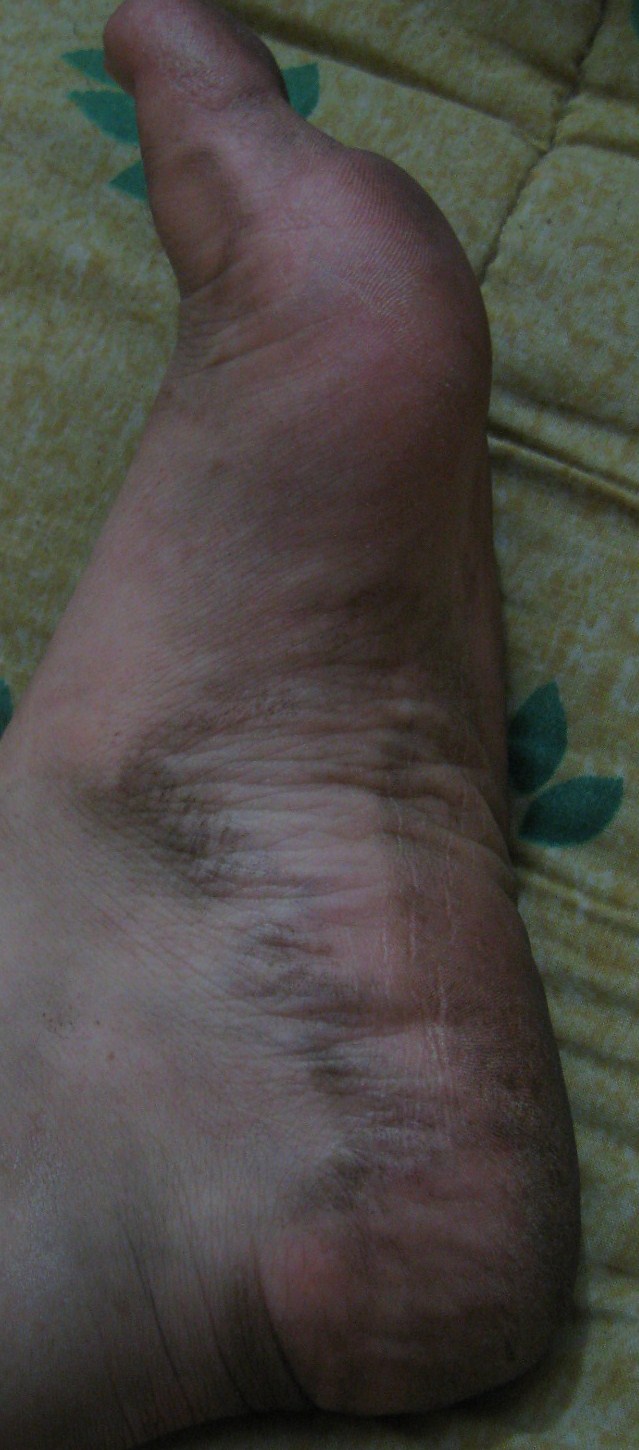
They don’t always look this bad. Sometimes they look worse.

In Boston, my feet lived like caterpillar kings, cocooned away from the outside world. I took care to shelter them from the elements, always dressing them in semi-clean, hole-free socks. Each day, I firmly laced them into closed toed shoes that were either waterproof or water-resistant, and each night I tucked them into bed along with the rest of my body. Only my head remained above the covers in order to keep an eye on my teddy bear, who I do not trust.

In Cairo, my caterpillar king feet have undergone a great metamorphosis. They have emerged from their sock cocoons transformed from soft, wussy flesh colored appendages to hardened, grey, creatures of the street.  I continue to watch the change with grim fascination as the days pass and Cairo grime continues to take its toll, as they become moth kings.

First, let us discuss the street environment as it relates to my feet. Since Cairo is essentially the last frontier of the desert, its streets are quite dusty. Some might even call them boulevards of dust, dust avenues, or lanes o’dust. In addition, the city’s continual decay and repair necessitates bags and piles of construction elements, which are set loose by the wind and join their long time companion, dust. To top it all off, garbage particles of various stripes also do their part in making a magical mixture of filth that is whipped up by the car, bus, pedestrian, and equine traffic.

Were the climate here similar to that of winter in Boston, my feet would have no need to concern themselves with these outside conditions. However, the climate being slightly hotter and drier, I was forced to cut the apron strings. I currently wear sandals daily, exposing most of my foot to the oven-like conditions of Cairo. Naturally, this has crisped my skin like a fine Christmas goose, and caused the formation of something akin to an exoskeleton over the majority of my foot’s surface area. This shell is comprised both of Cairo dust and dead skin cells that have baked onto my foot and now refuse to slough off.

As a cute furry creature snuggling against its mate in winter to stave off the cold, so the Cairo dust snuggles into every crease of my foot. At all times I have part of Cairo with me. Is there anything more poetic than seeing the greyish tinge of my heel and knowing that I am a carrier of the ancient history of the Pharoahs themselves? That as I walk down the street, I am absorbing the very heritage of great civilizations and various cuisines? Were I not afraid of contracting one of the more deadly diseases, I would surely stride barefoot down every thoroughfare in Cairo attempting to aggregate in the heel of my foot the very essence of this indescribable city, which I would then try to sell on ebay.

However, as much as I enjoy history immersing itself between my dead epidermal cells, my skin’s increasingly rough texture is slightly alarming, and I am almost certain my feet are going to start clacking on the ground like wooden clogs if I am not careful. After this year in Cairo, a pedicurist will only look at my feet and weep, which is why I’m going straight to a deck specialist to have her power wash my feet and then sand them down as soon as I get back to the states.

And no, I will not start wearing close toed shoes.

Tagged , , , , , , ,

Why yes, there is a puppet horse

When someone said they were going to go to the circus tonight, I ditched my plan of watching The Aviator alone and got

I'll put a real pic up when I get it. Imagine this big enough for two men.

myself in a taxi, more than ready to terrify screaming children along with the clowns. We never made it to the circus, however, somehow missing the big top and going to another venue close by that houses the National Folk Dance Troupe. Since anything with folk dance is bound to be a good time, our night ended up being well worth the entrance fee and initial confusion.

The show promptly began forty minutes late, but it made up for the initial annoyance by being incredibly long. Most of the evening consisted of crowded dance numbers with gaudy costumes covered in more sequins and tassels than you could shake a stick at, the ladies swiveling their hips like they were trying to get a rabid beaver to release their right buttocks and the men sometimes shaking actual sticks. The dances were certainly not authentic Egyptian, but they won first place in Drevets’ book for use of agricultural props, such as water jugs and sieves. The award in unnatural costume design went to the number right before intermission for its use of neon orange and green spandex in the ladies’ costumes, using it in a style boldly combining eighties aerobic wear, sixties bell bottoms, and mermaid themes.

The highlight of the night, however, by general consensus with myself, was the horsey puppet dance. The black horse puppet wore a loosely crocheted, neon colored harness and reign apparatus that contrasted nicely with the slick of green and sequins the woman donned from her head to her toe. I do not know of any Egyptian tradition in which women flirt with life size horse puppets or real horses, but apparently the ritual is quite extensive and quite real. The horse (two men in a horse costume) was by far the stand out performer of the night, nuzzling its snout and prancing its paws with incredible humorous dexterity, outshining the woman who also pranced about and slapped the ground with a stick. And then the night got awesome.

The black horse descended into the sparsely populated auditorium and bothered people, pretending to bite people’s shoulders and giving girls kisses on the cheek, something especially loved by the older ladies who expressed their pleasure by wagging their fingers at the horse and trying to shove it away. One lucky girl even got pulled up to the front of the room and was forced to dance with the horse. She was a good sport about it, though not as good of a dancer as the horse.

Though I caught myself saying “Is this still going? Ah yes, it is,” a number of times after zoning back in during yet another belly dance (though they certainly were impressive the first fifty times), long after everything had sunk into a haze of bright colors and amateurish dancing, it was still a quite enjoyable night. I really wish the whole thing had been done with puppets though. I also wish I had my camera…must steal pictures from friend.

Tagged , , , , , ,

Sowing, Winnowing, and Manuring

Today we went to the Egyptian Museum of Agriculture, a gem that has and will be overlooked by hordes of tourists for

Hands on learning.

years to come. In this context, the word museum is misleading since the Agricultural museum is, in fact, more like a playground. Here are some of the differences between a “normal” museum, and the Egyptian Museum (playground) of Agriculture:

1) A museum has guests.

The Museum of Agriculture does not have guests. From the disbelieving looks on the employees’ faces, we were the first foreigners visiting the museum since the woman or man from Lonely Planet discovered it. The other few museum patrons were there for picnicking or loitering purposes, but certainly not to see the museum itself.

2) A museum requires and undergoes regular upkeep.

The Museum of Agriculture requires but does not undergo regular upkeep. It is set up similar to the National Mall in that the museum is a group of five buildings centered around a green space that has trees and statues in it, but the comparison ends there. The statues are placed without any apparent design and the lawn and trees have been left to their own devices ever since they were planted. The museum employees are hired to be present at the museum but not to do anything to it, in order to preserve the natural deterioration process. Thus, a thick layer of dust and one case bird droppings coat all display cases, broken exhibits remain unrepaired, and all textiles within the museum are in danger of turning into dust at the touch of a finger.

3) Some museum employees are knowledgeable about the museum and its contents. There is a curator.

From what we saw, no museum employee knew anything about Egyptian agriculture or this museum dedicated to its existence aside from its hours of operation. The Agricultural museum employee’s job is this: “Sit or stand near the entrance of the hall. Should anyone walk in, stare at them. Open and close the doors at the appointed time. Avoid dusting or improving the museum in any way.” As for the curator–should he exist– he is either dead or has been on vacation for the past three decades.

The star museum employees assist people in entering the exhibits and taking pictures with the mannequins while sweating on them and gesturing wildly, afterwards demanding extra money for having clearly gone above and beyond his normal call of duty.

4) The museum exhibits are educational.

Are you getting the dusty attic feeling?

In theory, the Museum of Agriculture is filled with educational material, and yet it would be an Olympic feat to actually learn anything from it. Aside from the fact most things are unorganized and poorly labeled, you will be too distracted by the ridiculousness of the place in order to do anything besides contemplate the museum’s existence itself and the thickness of the cobwebs on the windows. The two things I took away from the Horticulture hall, for example, after seeing dusty glass case after dusty glass case of different kinds of wheat stalks and seeds, corn stalks and seeds, bread, fruits, vegetables, stages of growing of wheat, etc, were: “There is a lot of variety in the world” and “This took a long time to assemble.”

5) The museum exhibits are not to be touched so as to preserve them for the next visitors. For this reason, there is surveillance of some kind to prevent the most curious from overstepping their bounds.

In the Museum of Egyptian Agriculture, you are almost completely alone and can do whatever you want. The entire place feels forgotten if not yet abandoned. Climbing into the exhibits and taking pictures is encouraged, as well as exploring blocked off parts of the halls and rifling through anything that isn’t encased in glass.

6) The opportunity to interact with material not yet put on display is minimal.

At the Museum of Egyptian Agriculture, there is a cabinet full of documents and photos as well as bin full of antique cigarettes on the second floor of the Hall of Horticulture in a nook on the landing with some agricultural tools in it. Feel free to look at the photos and guess what they might be. Consider the very slim odds of them every being used or seen by someone who might actually be interested in the information.

7) The only fun to be had is through the joy of learning.

The best part of the agriculture museum experience was being able to run around in it like kids and cause a ruckus, feeling like we were breaking all the rules even though there were no rules to be broken in the first place. Also, the green space within the complex was a real joy, complete with nice trees, cool birds, and two little pergolas. Though using the word paradise might be too strong, it certainly felt like a land preserved outside of time and space, which I suppose is the purpose of a museum though in this case it was achieved accidentally.

Tagged , , , , , ,

Noodle Haste Makes Taste Waste

Post-feasting.

For the past few weeks, everyone in our program and their brother had been raving about the Uighur restaurants in town. During break time all I would hear is “Uighur this, Uighur that, noodles noodles noodles!” And to be honest, I was getting pretty fed up with it, as in hungry, as in wrathful that no one had been inviting me on these noodlespeditions even though I’d made it expressly clear from the beginning of Uighur-mania that I would love to go sometime and eat unwarranted amounts of cheap food.

First of all, what’s a Uighur? And is that a ooo–aye—gar? Or a uh-ee-ga-hur? Or maybe a gweer? Is it style of serving people, like those restaurants that serve everyone in the dark so they can know what blind people’s lives are like? Is it the cuisine from one of those countries in Europe that only rich people know about (credit: 30 rock)? Is it one of our rare capitalized adjectives like Friendly or Happy? In answer to these questions: Uighur is pronounced exactly as it is spelled and is exactly what it sounds like–Weegur as in meager and it is the name of an ethnic population in Chinese that is Muslim. For an low quality, confusing article on Wikipedia about Uighurs, click here. Otherwise, suffice it to say that there is an ethnically Muslim population in China known to English speakers as the Uighur people, and there is a community of them in Cairo because many come to study Arabic and/or Islamic studies at Al-Azhar university, one of the most preeminent institutes of Islamic scholarship in the world. They come here seeking spiritual knowledge and we go to them seeking delicious noodles. It does seem a fair exchange.

We finally organized a trip to this Uighur restaurant and I was not only invited, I was the guide since the original planners had to back out due to a shotgun invitation to a wedding. I was not a great guide. We ended up both taking a taxi and phoning a friend only to find the restaurant we were looking for was closed. Luckily, there an open one about 10 feet away, though we had heard rumors that this one was not as great. After eating my meal, however, I believe whoever said that should have their tongue cut out and served to the patrons of that restaurant as payment, since the food was awesome.

The restaurant contained four tables with enough room for perhaps 20 people and a kitchen the size of the bathroom in my apartment. It was full when we first got there, so we waited on the steps outside the almost open-air restaurant next to an empty baby carriage and a bowl of peeled garlic cloves. Traditional ingredients?

A table opens up and we shuffle in to the beat of a young man stretching and slapping fresh dough on the counter in the kitchen right behind us, his bare hands massaging the very noodles we were about to consume. Before we sat down, I thought it was a good idea to take a picture of the guy making the noodles since I, being tacky and foreign, consider normal things very interesting. I ended up taking a bad picture of noodle guy as well as offending the owner of the restaurant, who was not crazy about having tourists taking pictures of him like he’s in a zoo. I spent the rest of the night trying to get back on his good side by smiling a lot, but this never worked out to my advantage since he would say things like “There’s none of that left.” or “64 pounds” and I would just grin and say okay, clearly not understanding what he said until a second later when I felt like an idiot and was still on his bad side.

Despite my cultural faux pas, we managed to order five dishes by pointing to pictures in a literal photo album of the various offerings at the restaurant, dishes that still contained surprises since tofu and chicken look surprisingly alike and temperature levels do not translate well through photography. All the dishes we ordered were delicious, however, and were not unlike the more authentic Chinese food I’ve tasted in the states. This wasn’t any Panda Bowl, China Buffet, or Happy Garden. And the noodles! Oh what noodles! We ordered a soup with beef and lo-mein like noodles of unfathomable length, and I would just stick my fork right into the midst of it and start twirling until I had a veritable skein of noodle yarn in my hand and then like the pagan kings of old I would rip into it and feel the tender noodles break off around my hand until there was a little noodle graveyard right in front of me on the table.

I committed another critical error, however. In my noodle haste, I forgot how much I like to be able to taste the food I eat, so I decided it would be a good idea to shove a torch of noodles at near-boiling temperature into my mouth. Instantly I felt the outer layer of my oral cavity wither and die. It was worth it, though, worth the pain of that moment and every other mouthful. I don’t regret anything and I hope to be back to try that other restaurant and see how it compares to its cousin. We also paid only 15 pounds each for the meal…that’s less than 3 dollars and less than 24 Moroccan dirhams.

Tagged , , , , , ,
Design a site like this with WordPress.com
Get started